Widnes legends Mike O’Neill and Stuart Wright are to be inducted in to the club’s Hall of Fame at a special event later this year.
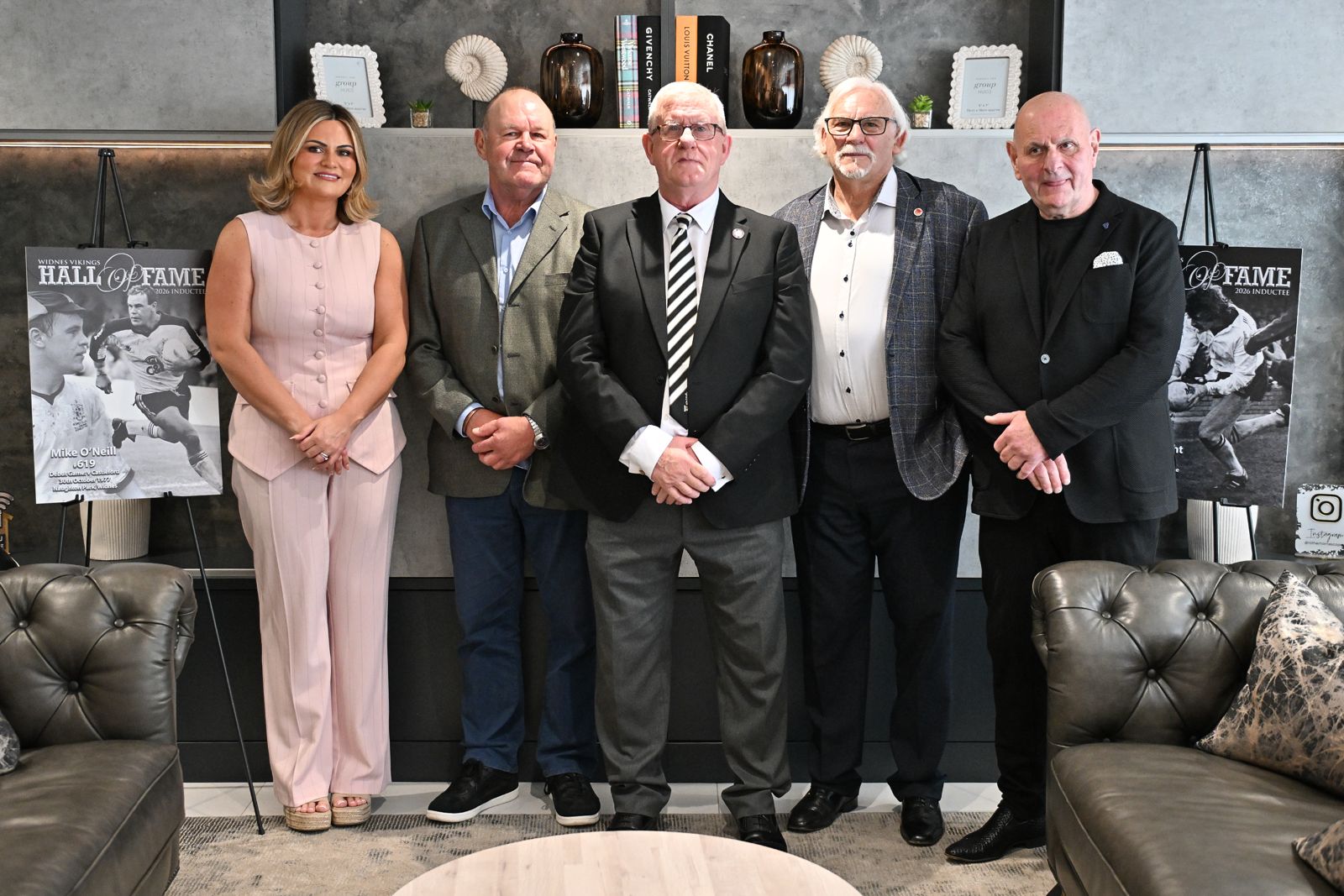
They received the news as part of a celebration lunch recently with heritage partners Rotherham House, alongside several existing Hall of Fame members, and the players present became the first to receive their club heritage numbers.
The club will launch its heritage numbers, awarded to every player to have made an appearance for Widnes since 1895, in full at the game against Sheffield on May 3. Full details around the heritage number launch and the Hall of Fame event will be announced shortly.
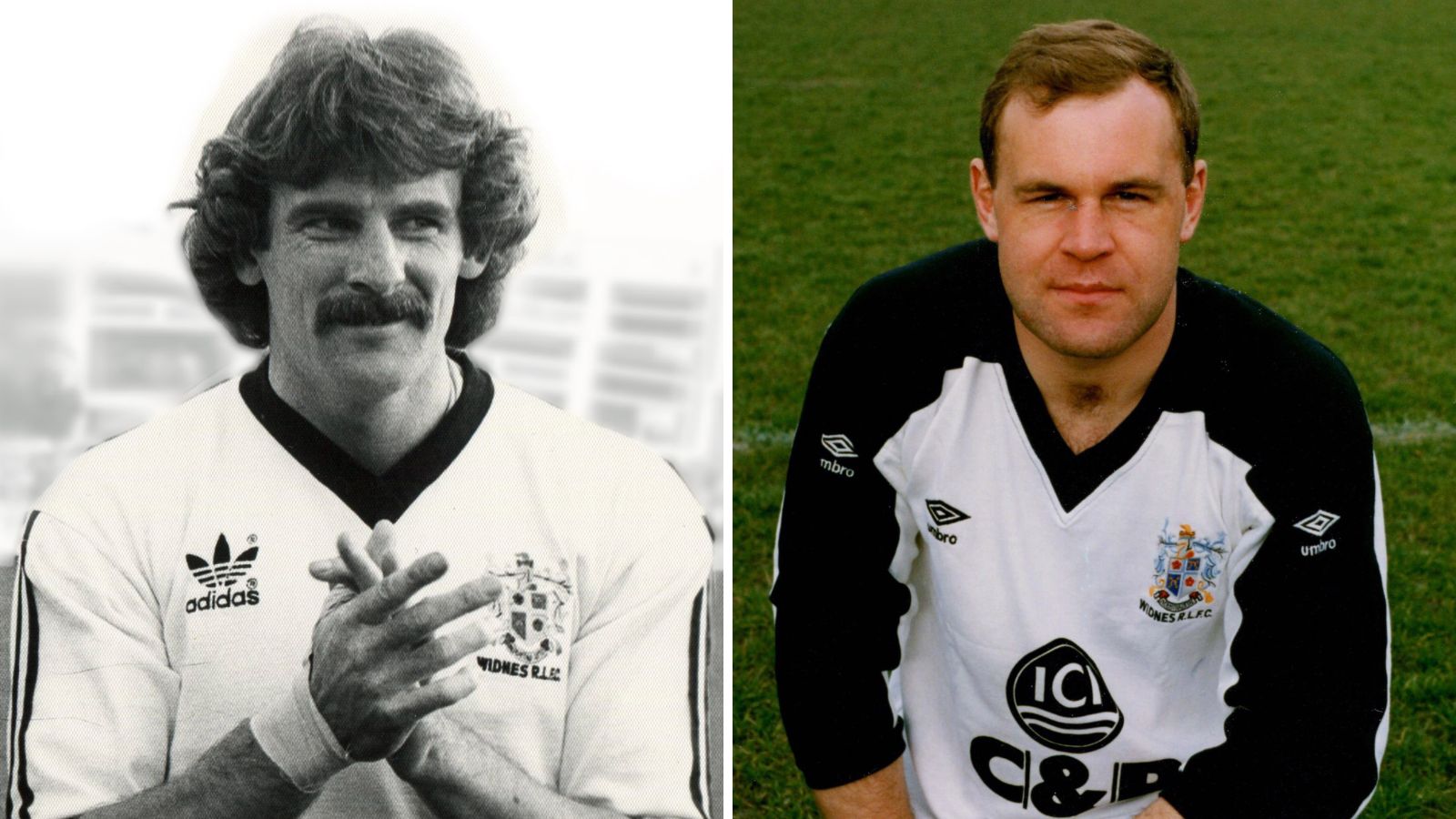
Mike O’Neill
Mike O’Neill made his Widnes debut in October 1977 in a league fixture against Castleford when he was still a month short of his 17th birthday.
He possessed a rare combination of graft and speed – ready to drive the ball in all afternoon and tackle everything that moved, but just as capable of running through gaps out wide or backing up a break to score from halfway.
In 1978/79, he established himself as a semi-regular in the first team under player-coach Doug Laughton, and the biggest moment of his young career arrived when he was selected as a substitute in the Wembley win over Wakefield.

Two years later, still not 21 years old, Mike collected a second Wembley winners medal against Hull KR.
There were plenty more finals and medals in that late Cup Kings era, culminating in the 1984 Wembley win versus Wigan. Mike was a Great Britain international at this point, having featured in the 1982 test series against the Kangaroos and toured with the 1984 Lions. By then Doug Laughton had resigned as Widnes coach and, with the retirement of Mick Adams, Eric Hughes and, later, Keith Elwell, Mike found himself as one of the senior players in a period of rebuilding.
When Doug returned as coach, Mike was still there as one of the key figures in the new golden era and to provide the solitary playing link with the late 1970s team. Although he missed out on the 1989 World Club Challenge triumph through injury, there were plenty of other honours to compensate, including back-to-back league titles.
Later in his career, he played for Rochdale and Leeds, where in 1994 he set a record for the longest span between a first and last Challenge Cup final, before he returned to end his career at Widnes, playing his final game in April 1995.
Mike said: “Words fail me sometimes. I really didn’t expect it. It was totally out of the blue. To be in such company, I’m absolutely proud but really shocked.
“We all strive to do our best for the team and the club, it’s just the effort you put in over the years, and then to think I’ve made the Hall of Fame is fantastic. I’m sure it’s every player’s goal, it’s my hometown club, and to be in it with the players I am in with, I am humbled.
“I don’t know what my brother will say! No, he’ll be made up. We played a lot together. It was a fantastic experience to have a brother in the side. You put a little extra in when your brother’s with you, you’ve got each other’s back. It was always good to have brothers in the side and of course the era we had and winning everything it was brilliant, absolutely brilliant.”
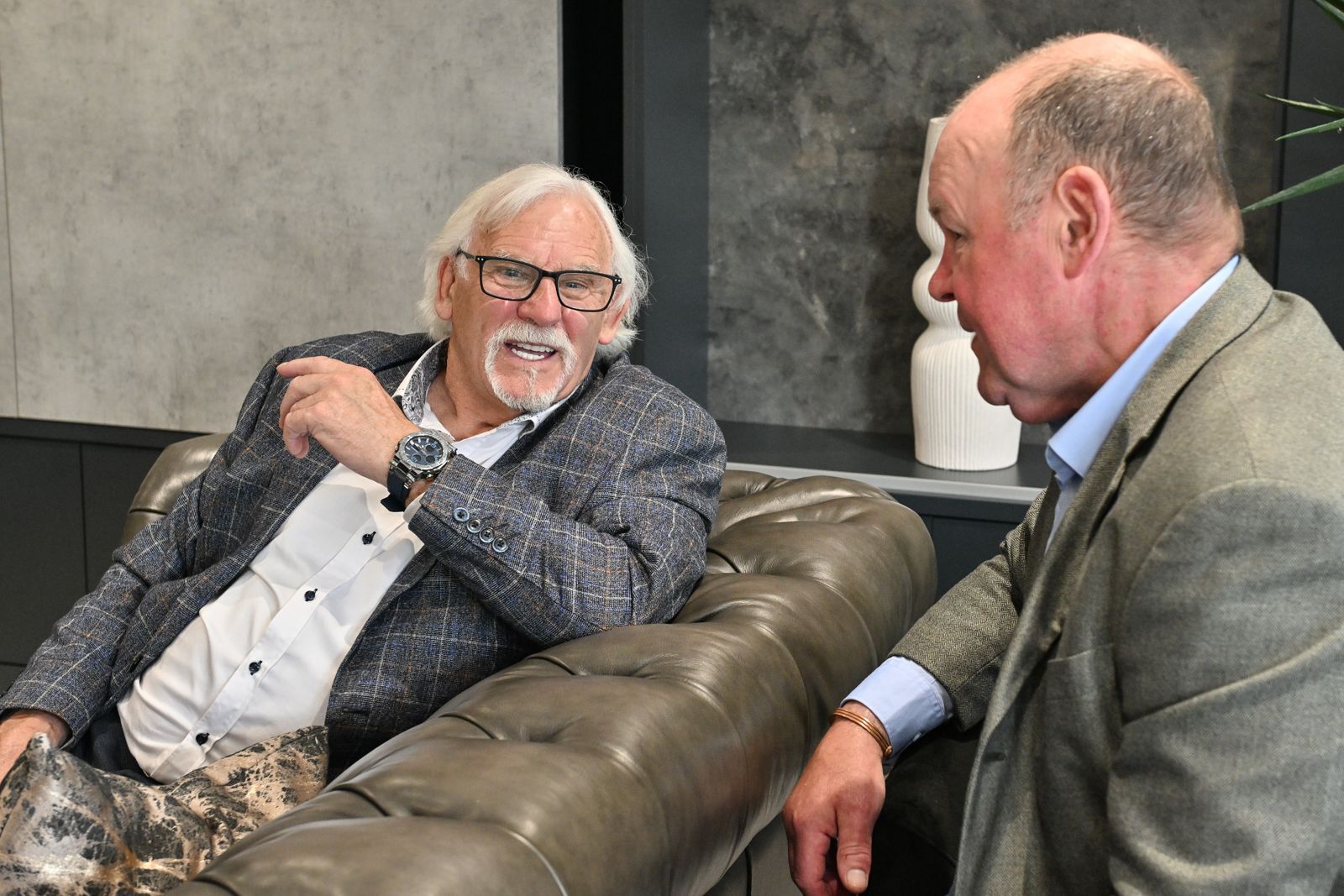
Stuart Wright
Stuart Wright arrived at Widnes in August 1976 from Wigan for a club-record fee of around £10,000 and established himself as arguably the club’s first ever world-class wingman.
Anyone lucky enough to have witness a typical “Wrighty” try will remember it well. He was a threat even when deep in his own half. Some quick footwork, a change of pace and a devastating body swerve and all of a sudden defenders would be grasping at thin air and he would be in the clear. And, at his peak, there was usually only one outcome once Stuart was running free in the open field.
He was the league’s top try scorer for two successive seasons in the years 1976-78 – the first Chemic to achieve that honour – and he featured in 17 of the 20 major finals that Widnes reached during his time at Naughton Park, despite some bad luck with injuries along the way. More often than not he made it onto the score sheet in those games, including a last second try to set up the 1978 Lancashire Cup final win and long-range touchdowns at Wembley in 1979 and 1982.
Allied to his pace and elusiveness, Stuart was also a brave and skilful finisher. For example, he was in agony after taking a knee to the back in a tackle in the closing stages of the 1977 Challenge Cup semi-final but, as the ball immediately switched back to his wing, he picked himself off the floor and squeezed past the cover tacklers to score at the corner for the match-clinching try.
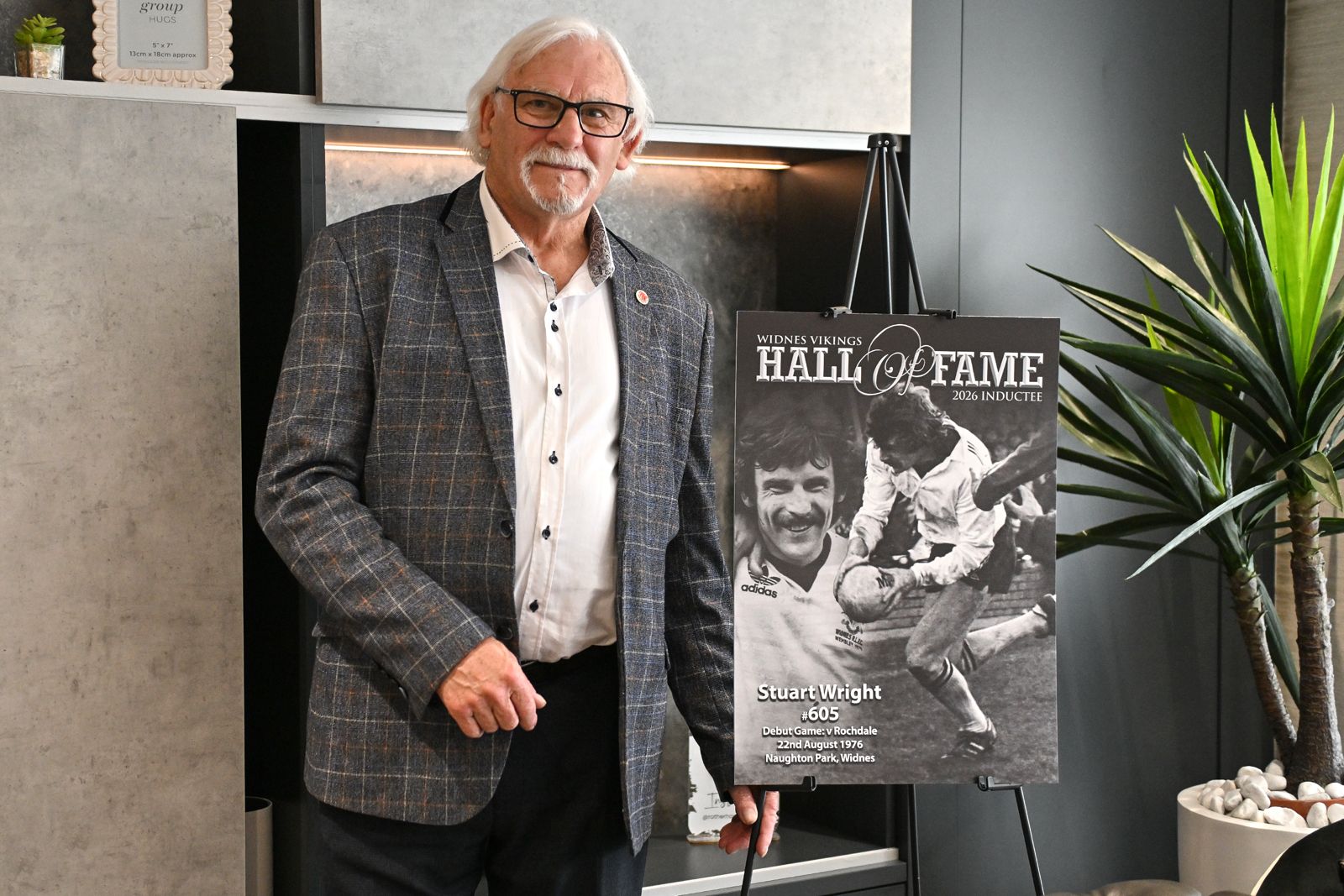
By the time of his retirement at age 37, making his final first team appearance in April 1987, he could reflect on a full and successful career that included scoring two tries in a famous Great Britain victory over Australia and a record four tries in a game for England against Wales.
Stuart said: “I’m absolutely made up. At the end of the day, that era and them lads, they’re heroes for me. That side, we knew when the club came round, we would up our game. You couldn’t fault them. I had some fabulous times.
“It’s an honour. It’s important too to get a heritage number, when you’ve played for a club and you get your number, and now I’m in the Hall of Fame, you can’t beat that.”
Last year, six legendary players who all played in the 1975 Challenge Cup final winning team were inducted in to the Hall of Fame as part of the 50th anniversary celebrations – Ray Dutton, Mal Aspey, Reg Bowden, Eric Hughes, John Foran and Mick George.
The inclusion of O’Neill and Wright will take the total number of players in the Hall of Fame to 24.
With thanks to Ste Jones and Steve Fox for their contributions.
There will be a number of exclusive interviews with members of the Widnes Hall of Fame on the club’s official YouTube channel over the next few weeks. A Widnes Vikings YouTube Premium subscription costs just £2.99 per month, click ‘join’ to sign up.